
The Crowd and the Crown
The Hunchback of Notre DameThis conflict-thread follows the political pressure between popular revolt, fragmented jurisdictions, and Louis XI’s effort to centralize power.
increasing Bearing strength in each event
 decreasing
Bearing strength in each eventdecreasingA Fragmented City
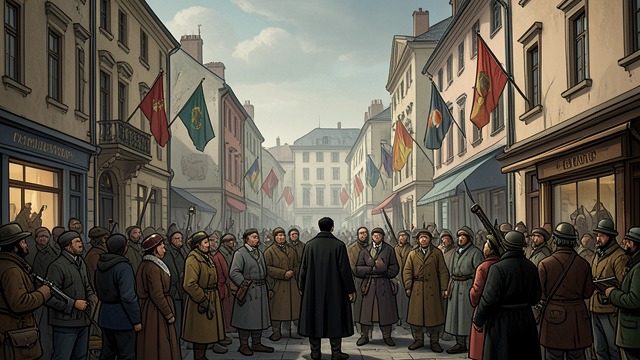
Many Authorities
Divided jurisdiction
Paris is divided among overlapping lords, courts, church jurisdictions, and municipal powers. No single police authority consistently controls the city.
Conflict in the streets
The patchwork allows local privileges and popular unrest to collide. A public disturbance can quickly become a challenge to several kinds of authority.
A King in the Bastille
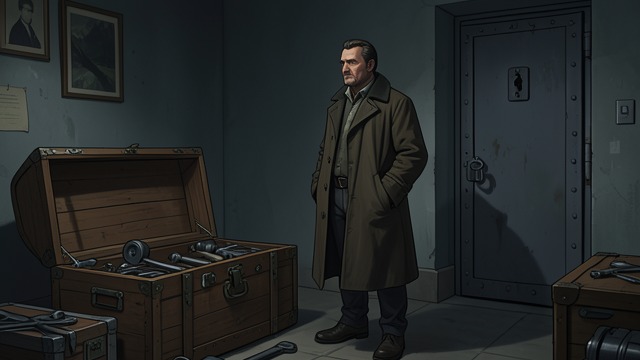
Louis XI at His Retreat
Rule through calculation
Louis XI receives accounts, manages appointments, and worries over costs from within the Bastille. His apparent economy masks a constant effort to strengthen royal control.
News of unrest
He initially welcomes the outcasts’ attack on the bailiff as a blow against feudal jurisdiction. His reaction changes when he learns Notre-Dame is also under assault.
The People’s Warning
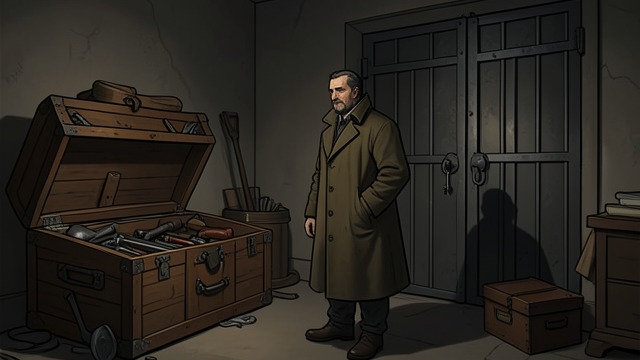
A Political Forecast
The hosier speaks plainly
Jacques Coppenole explains how grievances, a public call, and collective action can set a city in motion. His account challenges the king’s assumption that force always settles rebellion.
An hour not yet arrived
He describes the moment when bells, cannons, and collapsing strongholds announce the people’s power. Louis hears a prediction he cannot comfortably dismiss.
The King Changes Course
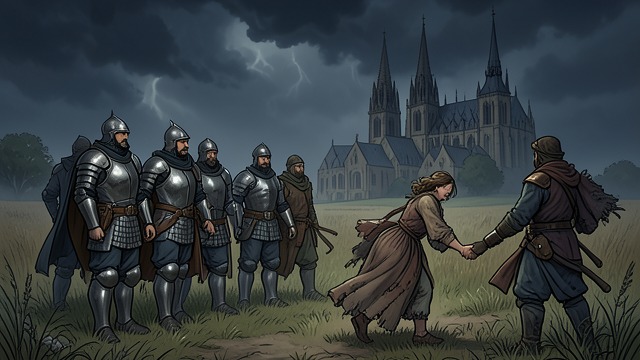
Royal Authority Threatened
The target clarified
Louis learns that the outcasts intend to seize Esmeralda from Notre-Dame, not merely attack the bailiff. He treats the assault on the church as an assault on royal protection.
A decisive order
He mobilizes troops and commands a brutal suppression. The crown’s response shifts the conflict from local rescue to a demonstration of centralized force.
After the Suppression
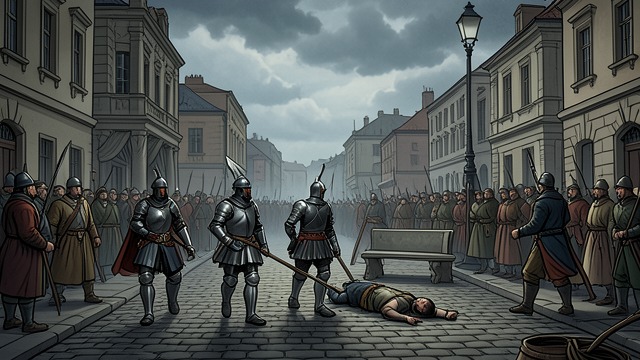
Order Restored by Violence
A cleared square
The royal troops defeat the outcasts, and officials remove the dead from the Place de Grève. The city’s visible disorder is quickly swept away.
Power without justice
Esmeralda is returned to the executioners despite her sanctuary and her innocence. Political order is restored without correcting the judicial wrong that began the crisis.
Paris in the fifteenth century
The night of the Notre-Dame siege
During Coppenole’s conversation with Louis XI
After the attack on Notre-Dame is reported
The morning following the siege
